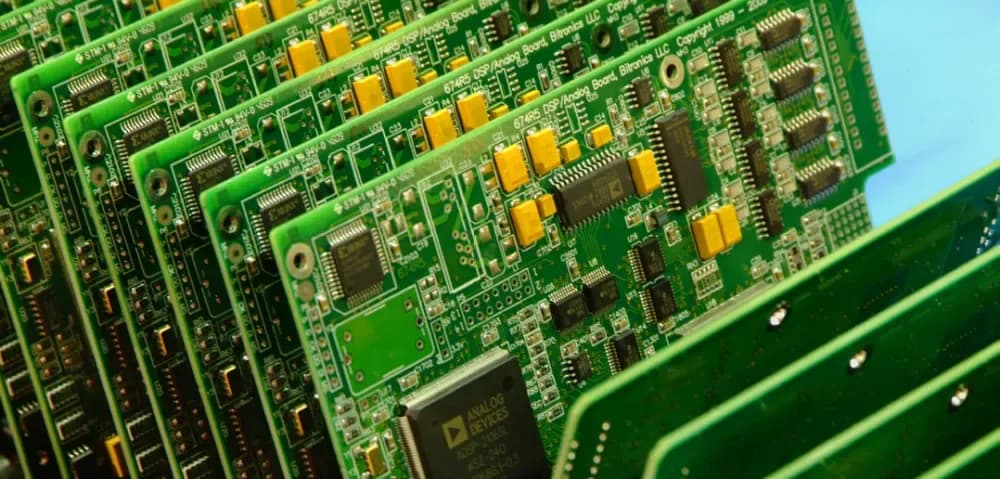
The printed circuit board (PCB) is one of the key concepts in electronics manufacturing. The PCB was born out of a need to reduce the size and manufacturing costs of electronics as electronics became more prevalent in consumer goods. Essentially, a PCB is a board that has lines and pads that connect various points together. It allows signals and power to be routed between physical devices.
Like a layer cake or lasagna, a PCB is made up of alternating layers of different materials that are laminated together with heat and adhesive. Discussed below are the different components of PCBs.
Substrate
This is the base material of a PCB. The substrate is usually fiberglass, or FR4. The FR4 substrate gives the PCB its rigidity and thickness. However, there are also other, less durable substrates, such as epoxies and phenolics. These PCBs are much less expensive. You can tell you are working with these PCBs when soldering them, as they have a distinctive bad odor. These types of substrates are typically found in low-end consumer electronics.
Copper
Copper is generally applied to both sides of the substrate. In lower-end electronics, the PCB may only have copper on one side. A double-sided or two-layer board refers to the number of copper layers (i.e., two). Most PCBs have one ounce of copper per square foot, but some that handle very high power may use two or three ounces.
Soldermask
On top of the copper, the soldermask gives the PCB its green color. The soldermask is overlaid onto the copper layer to insulate the copper traces from accidental contact with other metal, solder, or conductive bits. The soldermask helps the use solder to the correct places and prevent solder jumpers.
Silkscreen
Finally, the silkscreen layer is applied on top of the soldermask. The silkscreen adds letters, numbers, and symbols to the PCB, allowing for easier assembly and indicators for humans to better understand the board. Silkscreen labels are often used to indicate the function of each pin or LED.
Now that you have an idea of the basic structure of PCBs, why not dig a little deeper? Blackfox offers courses all about PCBs and PCB repair, among other fascinating electronics manufacturing topics. A renowned technical training center, Blackfox’s courses are appropriate for beginner and experienced electronics systems technicians alike. Check out our course calendar to learn more and register today.
Source:
Sparkfun Electronics. PCB Basics.