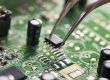

Soldering is a complex task that requires much precision on the part of the operator. With enough practice, one can gain a better understanding of the tools and techniques, thereby improving productivity and quality and decreasing the risk of board damage. Discussed in this blog are some of the basics of hand soldering—note that this blog is not a substitute for hands-on practice.
1. Establishing Strict Process Controls
Strict process controls must be developed, ensuring the consistency and repeatability of your results.
2. Selecting the Proper Soldering Tip
The second major component to successful hand soldering is tip selection. It is important to choose the correct geometry for the application such that the tip fits the joint correctly, resulting in greater power delivery, increased tip life, and higher efficiency.
- Using a tip that is too small will take longer, abuse the tip, and not efficiently pass power to the load.
- On the other hand, a tip that is too large will damage the tip, damage the PCB, and cause a hole in the tip.
General guidelines:
- Shorter, bulkier tips deliver more power.
- Short, blunt tips should only be used for heavy loads.
- Long, fine tips are best for hard-to-reach applications or fine terminals, but note that they don’t deliver power as efficiently, since the joint is so far from the heater.
- Larger tips generally have more iron plating, which makes them more robust in abrasive conditions.
3. Choosing the Correct Temperature
The next thing to consider is temperature selection. Try to use the lowest temperature possible, as this reduces the risk of damage to the board. To change the temperature, you have to change the tip cartridge.
4. Understanding Flux Types
Finally, you want to consider flux selection.
Clean (RMA) flux
- Most traditional flux
- High in acidity
- Leaves more residue that must be cleaned
- Better for tip longevity
No-clean flux
- Most common
- Less flux per volume in the wire core solder
- Weaker acidity than RMA
- Need to work with lower temperatures
- Leaves minimal residue
- Less cleanup
Aqueous (OA) flux
- Has inorganic acid
- More active than that of the RMA flux.
- Requires thorough cleaning
Further Training
To learn more about soldering techniques, check out the courses at Blackfox—a premier certification center for electronics systems technicians.
Source:
Sloan, David & Huerta, Leo. Hand Soldering Basics. Metcal.